8th Circuit Conference 2025 (Presented by National Organization of Social Security Claimants’ Representatives)














14.25 hour CLE
Get this course, plus over 1,000+ live webinars.
Learn More
Program Summary
This two-day Social Security Disability law conference delivers an advanced, practice-focused curriculum designed for attorneys, advocates, and professionals handling disability claims at every stage—from administrative hearings to federal court appeals. The conference brings together judicial insight, regulatory updates, vocational analysis, medical evidence strategies, and emerging issues that are reshaping disability adjudication nationwide.
Participants will explore district court review standards, learn how to craft more persuasive briefs, and gain practical guidance on navigating hidden Social Security policies that can strengthen claims. Sessions provide in-depth instruction on developing effective medical source statements, using Occupational Requirements Survey data, and building stronger hearing records through strategic advocacy. Additional segments address the growing role of artificial intelligence in SSA practice, ethical considerations surrounding AI use, and the ongoing challenges posed by vocational testimony, job-number evidence, and judicial overreach at the hearing level.
The conference also examines recent Eighth Circuit developments, significant district court decisions, and new SSA policy proposals—including SSR 24-3p and the sweeping “MegaReg” rule changes. Attendees will benefit from specialized content on vocational expert methodology, proffer responses, negligent security claims, and operational best practices for running an effective disability law practice.
Across all sessions, the focus remains on practical, immediately applicable tools that improve case preparation, enhance advocacy, and increase the likelihood of favorable outcomes for claimants.
Key topics to be discussed:
- Judicial review and federal court practice
- SSA policies, regulations, and administrative guidance
- Medical Source Statements and evidence development
- Artificial intelligence in disability law practice
- Ethics in advocacy and technology use
- Advocacy challenges in the disability hearing process
- Mental health and complex medical issues in SSD cases
- Vocational evidence and job-number analysis
- Case development and hearing preparation
- Eighth Circuit and district court updates
- SSA policy changes, including MegaReg
- Vocational expert methodology and perspectives
- Proffers and post-hearing advocacy
- Law practice management for disability firms
This course is co-sponsored with myLawCLE.
 Closed-captioning available
Speakers
 David T. Schultz | District of Minnesota
Before becoming a United States Magistrate Judge, David Schultz was a trial lawyer and partner with Maslon, LLC. He received his Bachelor’s degree from Carleton College and his law degree from Stanford. As a lawyer, Judge Schultz tried dozens of cases to verdict in state and federal courts all over the country. He is certified as a Civil Trial Specialist by the National Board of Trial Advocacy.
Judge Schultz also devoted hundreds of hours to pro bono representation, including representing death row inmates, seeking and obtaining exonerations of the wrongfully convicted, and helping to secure justice for the families of murder victims in the United States and abroad. In 2002, Judge Schultz traveled to Kosovo as a delegate of the ABA’s Central and Eastern European Law Institute. There he helped create the criminal law bench book for the re-constituted Kosovo judiciary. He was appointed to the bench on February 7, 2017.
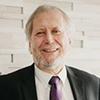 Thomas A. Krause | National Organization of Social Security Claimants’ Representatives
Thomas A. (Tom) Krause has represented claimants seeking disability benefits for more than 40 years. He worked for 20 years for Legal Services programs in Iowa and Minnesota. Tom also spent 21 years in private practice, primarily handling federal court appeals of disability claims.
After a year as NOSSCR Litigation Director, he has returned to briefwriting. Tom has been a Sustaining Member of NOSSCR for 30 years and served on the NOSSCR Board for eight years. He has presented at numerous NOSSCR conferences, Eighth Circuit Social Security Disability Law conferences, Legal Aid presentations, and Minnesota State Bar Section meetings.
 Ed Olson | Olinsky Law Group
Ed Olson has been representing individuals claiming Social Security disability benefits since 1991. He has successfully represented clients at all levels of the Social Security Administration’s disability claim process, from the initial application stage through the Eighth Circuit Court of Appeals.
Ed frequently speaks to groups and organizations regarding the Social Security disability claim process, and has been a featured speaker at several meetings of the National Organization of Social Security Claimants’ Representatives (NOSSCR).
 Theodore Norwood | National Organization of Social Security Claimants’ Representatives
Ted Norwood started practicing Social Security law in 2007 after graduating from the University of Missouri – Columbia School of Law. He lives in St. Louis and is a member of the Missouri Bar. He has represented claimants across the country at the administrative level and in federal courts.
He has served on the NOSSCR Board of Directors for several years, beginning as the 8th Circuit Representative. He is currently an at-large board member serving as the Treasurer.
 Nick Coleman | LexMed
Nick Coleman is a Social Security Disability attorney and legal tech innovator based in Bentonville, Arkansas. He began his legal career managing a high-volume Social Security Disability practice before transitioning to appellate work with his own firm, Coleman Law Firm. His extensive experience in both high-volume and appellate settings informs his approach to developing legal technology solutions. Nick holds an AV-Preeminent rating from Martindale-Hubbell, underscoring his commitment to excellence and integrity in his practice.
As the co-founder of LexMed, Nick is dedicated to creating intuitive, AI-powered tools designed specifically for attorneys, focusing on streamlining workflows and enhancing efficiency. He is passionate about the ethical use of AI in the legal field, ensuring that technological advancements align with the core values of the profession. Recently, Nick was appointed to the Arkansas Bar Association’s AI Task Force, where he contributes to the development of responsible AI practices in law.
In addition to his work with LexMed, Nick remains actively engaged in his legal practice, advocating for clients and exploring innovative ways to integrate technology into everyday legal processes. His dual commitment to both practicing law and advancing legal tech reflects his belief that technology can empower attorneys to deliver better advocacy and improve client outcomes.
 Eric T. Cooperstein | Law Office of ETC
ERIC T. COOPERSTEIN, the “Ethics Maven,” has represented or advised over 1,500 lawyers, judges, law firms, and bar applicants in nearly twenty years of private practice. His work includes defending ethics complaints, providing advice and expert opinions, and assisting lawyers in withdrawal motions, fee disputes, and law firm break-ups.
Eric is a frequent CLE presenter, webcaster, and moderator in Minnesota and nationwide on legal ethics and law practice management. Eric currently is a Director of Minnesota Lawyers Mutual Insurance Co. and has held various leadership positions in the Hennepin County and Minnesota State bar associations and the ABA.
 Meghan Gallo | GCC Law firm
Meghan Gallo is a dedicated regional attorney at GCC Law firm in Rogers, Arkansas, with a practice extending across states in the Midwest and the South. With 15 years of experience, Meghan specializes in representing disabled individuals before the Social Security Administration and in Federal Court. She earned her undergraduate business degree from the University of Arizona’s Eller College of Management before moving to Arkansas to attend the University of Arkansas School of Law. There, she excelled academically, making the Dean’s List and earning her Juris Doctorate in 2010.
Meghan’s practice is defined by her unwavering commitment to advocating for the rights of the disabled. Her dedication to taking on complex legal challenges is exemplified by her vigorous efforts to address vocational expert issues, where she has fought tirelessly to ensure that her clients receive fair treatment under the law. Meghan’s determination to navigate and resolve intricate legal matters showcases her zeal as an advocate for those she represents.
In addition to her legal work, Meghan is also a proud parent of a disabled child, providing her with valuable insights into the intricacies of living with a disability. This personal experience, combined with her professional expertise, strengthens her resolve to fight for the rights and well-being of her clients.
Outside of her legal practice, Meghan is an accomplished outdoors enthusiast. She has been granted a fellowship in the Cave Research Foundation, reflecting her deep passion for exploration and discovery. Meghan and her family reside in Rogers, Arkansas, where she and her family enjoy caving and exploring the natural beauty of the region.
 Asha Sharma | Disability Partners, PLLC
Asha has been an attorney since 1991 and has practiced Social Security Disability law since 2005. She has handled more than a thousand Social Security Disability hearings. Asha has done many presentations about the disability process. She is a member of the National Organization for Social Security Claims Representatives and has presented to this organization multiple times. She was co-chair of the Social Security Section of the Minnesota State Bar Association.
Asha has had a wide range of experience in the law. For ten years, she worked for the Minnesota Department of Human Services in disability health, children’s mental health, and other areas. She was an Adjunct Professor at the William Mitchell School of Law from 2004 to 2006 and was a volunteer mediator at Ramsey County.
Asha graduated with honors from the University of Minnesota Law School, where she was an editor at the Minnesota Law Review. Upon graduation, she clerked for the Minnesota 3rd District Court (Rochester, MN) and later at the Minnesota Court of Appeals.
Asha is a lifelong Midwesterner: she was born and raised in Wisconsin and has lived in Minnesota for more than 30 years. She enjoys travel, reading, hiking, and spending time with family, especially spoiling her grandkids, nieces, and nephews.
 Laura Melnick | Regional Legal Services (SMRLS)
Laura Melnick is the Lead Economic Justice Attorney at Southern Minnesota Regional Legal Services (SMRLS), where she supervises the East Metro Economic Justice Unit and champions legal access for low-income communities. With many years of experience in legal aid, Laura has built a career rooted in advocacy, compassion, and systemic impact. Since 2016, she has led SMRLS’s economic justice initiatives, focusing on issues like housing, employment, and public benefits.
Laura earned her law degree from the University of Colorado School of Law and completed her undergraduate studies at Carleton College. Her work reflects a deep commitment to equitable access to justice, and she is widely respected for her strategic litigation skills and empathetic client advocacy.
 Sarah Bohr | Bohr & Harrington, LLC
Sarah H. Bohr has specialized in Social Security law for over 40 years and writes winning briefs for filing in Social Security federal court cases in the district courts in nearly half of the states as well as most circuit courts of appeal.
Sarah is most proud of her successful argument before the Supreme Court inSims v. Apfel, 530 U.S. 103 (2000), which turned out to be instrumental to the success of her career as it allows her to approach each federal appeal as a puzzle and to figure out the best issues to raise.
 Jason Heinze | Claim Data
Jason Heinze has been representing clients in Social Security disability claims and long term and short term disability claims under ERISA since 2015.
In 2019, he started exploring a variety of ways to document his clients’ invisible symptoms like pain, fatigue and psychological suffering. This exploration led him to develop his own symptom tracking system that eventually became ClaimData: the easy-to-use symptom and impairment tracking software designed specifically for busy disability attorneys and representatives.
 Wes Kappelman | Kappelman Law Firm
Wes has been practicing law since 2014, primarily working social security disability cases in federal court with attorneys in Iowa, Nebraska, and Minnesota.
Wes’ federal court work includes work on the Davis v. Saul cases out of the Eighth Circuit which were consolidated with Carr v. Saul from the Tenth Circuit and decided by the Supreme Court in 2021.
 Jesse Ogren | Wisconsin Return to Work Center
Jesse Ogren has experience in professional vocational services including forensic services for personal injury, divorce, FELA, workers compensation, and ADA related cases. He has performed vocational evaluation, case management, job analysis, and job placement with agencies like the States of Arizona, Wisconsin and Minnesota vocational rehabilitation departments, the Veterans Administration vocational rehabilitation department, and the federal government. He has served on the counseling board for IARP, he has been certified as a Forensic Vocational Evaluator with the A-R-E-A Organization, and he has been licensed as a Certified Rehabilitation Counselor and Licensed Professional Counselor.
Mr. Ogren came to the Wisconsin Return to Work Center in 2008 after starting his career in Phoenix, Arizona at the Rehabilitation Specialists Group. He brought his knowledge of public rehabilitation programs to the company and continued working in that area. Although the office resides in Minnesota, the company maintains the name Wisconsin Return to Work Center because of its founding in 1992, in Centuria, Wisconsin. Wisconsin is viewed as historically important in the development of vocational rehabilitation programs nationwide, and Mr. Ogren received his training in the field at the University of Wisconsin Stout as a master’s level vocational rehabilitation counselor and evaluator.
 Adam Sundling | Walker Firm, PC
Adam Sundling, based out of the Twin Cities Metro, has been practicing Social Security Disability for over 3 years. Over his time in the field, he has handled cases from all 50 states including some principalities and territories, such as Puerto Rico and the Virgin Islands. His passion for providing the best possible chances of success for those that file for disability benefits leads him to push the field of Social Security Disability to empower other advocates to be the best representatives that they could possibly be.
Adam now is with Walker Firm, PC out of California and still providing his best advocacy while continuing to develop creative methods for pushing back against the seemingly indestructible and never-ending walls that prevent claimants from receiving Social Security Disability benefits.
 Carrie Burton | Midwest Disability
Carrie Burton is a partner with Midwest Disability. She has been practicing Social Security disability law for 13 years. Carrie also serves as co-chair of the Minnesota Social Security section.
While her primary focus in Social Security law, Carrie also practices immigration law focusing on asylum cases. Carrie lives downtown Minneapolis and spends her free time training a very naughty puppy.
Emily Cooper | Cooper Law
In her 24 years of practice Emily has seen cases from all sides and represented a wide variety of client types. Her practice has included complex litigation issues, trials and evidentiary hearings, as well as alternative dispute resolution and settlement strategy.
She brings this knowledge to her case work and focuses on family law and social security disability claims at Cooper Law. As the managing partner, Emily works hard to assure that all cases are handled professionally and with personal attention and care.
 David Camp | National Organization of Social Security Claimants’ Representatives
David Camp is the CEO of 162 Strategies, advising select clients on disability government affairs policy. He serves NOSSCR as our Senior Policy Advisor and General Counsel.
Previously, David served as NOSSCR’s CEO after many years on NOSSCR’s Board of Directors (including as President from 2021 through 2023). David led NOSSCR’s transition to a new home in Washington, with an emphasis on advocacy and expanded member services.
David began his career at a legal services program, before serving as clerk to Missouri’s first disabled Supreme Court justice. In private practice, David represented disabled claimants for more than 25 years, focusing on service to the homeless. He operated a firm while handling cases administratively and before federal courts in the 6th, 7th, and 8th Circuits.
David is a member of the National Academy of Social Insurance, the Editorial Advisory Committee for West’s Social Security Reporting Service, and author of both “Current Social Security News” and “Social Security Claims and Procedures” for Westlaw. He founded the Administrative Law Committee for the Bar Association of Metropolitan St. Louis, and is a Past President of the Missouri Lawyers Trust Account Foundation. He is a recipient of the Social Security Region 7 Commissioner’s Public Service Award, and NOSSCR’s Sweeney Award for Distinguished Service honoring his work litigating an end to the Secret ALJ Policy.
Steve Rollins | Office of Disability Policy
Steve Rollins worked in Social Security’s Office of Disability Policy for nearly five years. He spent more than ten years representing disability claimants.
Agenda
Day 1 – Thursday, November 6, 2025
View from the Bench I: DC Magistrate | 9:00am – 10:00am
Magistrate Judge David T. Schultz will be providing his view of issues affecting Social Security disability appeals in the Federal District Courts. Judge Schultz will begin by addressing the standard of review at the district court level. He will discuss his thoughts on the differences between the substantial evidence standard and the substantial evidence on the record as a whole standard.
Judge Schultz will talk about issues that he sees as being important in District Court appeals, and issues that do not resonate at the District Court level. The Judge will also discuss the structure and content of briefs, both what he finds persuasive and not persuasive. Finally, time permitting, the Judge will give his thoughts on the Brian T.D. v. Kijakazi decision and the 8th Circuit’s treatment of that decision.
Speaker: The Honorable David T. Schultz
Break | 10:00am – 10:15am
Minnesota Olson and the Hidden Treasures of SSA | 10:15am – 11:15am
This presentation by Ed Olson and Tom Krause reveals lesser known Social Security policies, including administrative waiver tolerance; past relevant work analysis; composite jobs and workplace accommodations; medical-vocational profiles for arduous work histories and borderline age applications; and recent emergency messages restricting use of obsolete occupation in “not disabled” determinations; and continuing disability review patterns.
The materials emphasize practical POMS applications and regulatory updates that disability attorneys can use to strengthen advocacy and better navigate the Social Security system.
Speakers: Thomas Krause and Ed Olson
Revising MIQs/MSSs | 11:15am – 12:00pm
The Medical Source Statements (MSS) 8th Circuit Conference 2025 session focuses on how to effectively develop and use MSSs in disability cases. It explains what qualifies as an MSS under the CFR and why these statements—detailing specific abilities and limitations—are critical to building strong claims. The session offers practical advice on obtaining and designing MSSs, encouraging attorneys to move away from checkbox forms toward short, focused questions that are easier for doctors to complete and clearer for Administrative Law Judges. It emphasizes tailoring MSSs to the specific issues in each case, referencing supporting evidence, and engaging providers creatively to make participation easier.
Beyond forms, the session explores obtaining MSSs through direct interactions or summaries and involving other medical professionals when doctors are less accessible. Participants are encouraged to incorporate Occupational Requirements Survey (ORS) data to capture modern job demands like pace control, problem-solving, and interpersonal reliability. Ultimately, strong, well-supported MSSs reduce reliance on vocational expert cross-examination—streamlining hearings and increasing the chances of winning cases without appeal.
Speaker: Theodore Norwood
Lunch | 12:00pm – 12:45pm
AI Workflows for SSD | 12:45pm – 1:45pm
The “AI Workflows for SSD” CLE presentation offers Social Security Disability attorneys a practical and engaging guide to ethically and effectively integrating Artificial Intelligence into their practice to manage challenges like massive evidence files, complex rules, and tech-savvy opposition. It argues that since the Social Security Administration already uses AI to analyze claims, attorneys have an ethical duty under Rule 1.1 to adopt comparable tools—summed up by the theme, “Don’t Bring a Typewriter to an AI Fight.”
The program outlines a framework for responsible AI use, emphasizing that AI should augment—not replace—human judgment; that data security and redaction are critical; and that attorneys must fact-check outputs to avoid errors or ethical breaches. It also stresses vetting vendors and considering secure, local models for sensitive data. Demonstrated workflows include automating SSA correspondence, analyzing medical records against Listings, organizing citations from ALJ decisions, and using AI to brainstorm or draft briefs. The presentation concludes that while AI can streamline and strengthen legal work, the lawyer’s wisdom, judgment, and human connection remain irreplaceable.
Speaker: Nick Coleman
Are you Generating Ethics Issues with Generative AI? | 1:45pm – 2:45pm
New tech tools bring new challenges for lawyers. This session will discuss AI ethical pitfalls and how to avoid them, including competency, confidentiality, billing, and supervising other lawyers.
Speaker: Eric Cooperstein
Break | 2:45pm – 3:00pm
When Advocacy Becomes “Adversarial”: Navigating Retaliation and Judicial Overreach in the Disability Hearing Process | 3:00pm – 4:00pm
This panel will examine the growing tension between zealous advocacy and administrative retaliation in the Social Security disability hearing process. Practitioners are increasingly penalized for doing their jobs—objecting to improper consultative examinations and unqualified medical experts, challenging vocational witnesses, engaging in meaningful cross examination, and insisting on due process for their clients. Judges often label legitimate advocacy as obstruction, impose arbitrary time limits on questioning, and criticize representatives for doing too much rather than too little.
The discussion will explore how these dynamics erode fairness, discourage transparency, and create a chilling effect on the very advocacy the system depends on to function lawfully. Panelists will share real-world experiences, strategies for protecting the record, and approaches to maintaining professionalism and client-centered representation even in the face of judicial hostility. The session will also consider how accountability mechanisms can be strengthened to ensure that administrative adjudication remains grounded in law—not personality, power, or convenience.
Speaker: Meghan Gallo, Laura Melnick, Asha Sharma, and Ed Olson
Using Hidden Gems in Ruling to Win More Cases | 4:00pm – 5:00pm
Sarah Bohr will share arguments based on published circuit cases addressing mental illness, two of which she’s won, such as: where “claimants consume antidepressant, anticonvulsant, and/or antipsychotic drugs, consistently attend visits with mental health professionals, and endure constant medication adjustment and management, their treatment is classified as anything but ‘routine and conservative'”; an ALJ “must take into account the fundamental differences between the relaxed, controlled setting of a medical clinic and the more stressful environment of a workplace”; many people with severe mental illness “are still capable of eating, putting on clothes in the morning, and purchasing basic necessities”; but “[n]one of those activities, however, say much about whether a person can function in a work environment”; it is “common knowledge that depression is one of the most underreported illnesses in the country because those afflicted often do not recognize that their condition reflects a potentially serious mental illness.”
Speaker: Sarah Bohr
Day 2 – Friday, November 7, 2025
Exposing the Step 5 Job Number Crisis: From Administrative Stonewalling to Federal Court Reversal | 8:00am – 9:00am
Meghan’s session on the lack of statistical and scientific integrity in Step 5 vocational data will discuss how the setup at the administrative hearing stage leads to remands in federal court on due process grounds. She will outline how the system demands that claimants and practitioners give the Administration absolute discretion on the Step 5 issue—an arrangement that cannot withstand even the most basic due process standards.
The reality is that the Administration creates a catch-22 for claimants, who are penalized both for not doing enough and for doing everything possible to expose the lack of substantial evidence supporting Step 5 job number findings. Meghan will explain why each step matters—from the five-day letter to the post-hearing memorandum—what to expect from the Administration at each stage, and how these steps connect to specific federal arguments.
The session will also touch on key Supreme Court cases in administrative law, both within and beyond the SSA context, and examine Biestek v. Berryhill, including how it both supports and differs from the process discussed here.
Speaker: Meghan Gallo
Ways to Improve Your Case / How to Eliminate Jobs | 9:00am – 10:15am
Effective case development in Social Security Disability practice requires understanding your claimant, your goals, and the evidence available. At a minimum, attorneys must notify the ALJ of medical records, obtain them (sometimes through HITMER), and prepare the claimant by reviewing key issues and evidence. However, most cases demand deeper development, including gathering complete medical and work records, SSA forms, education documents, medical source statements, witness testimony, and other supporting materials.
The goal is to make the case as clear and efficient as possible for the judge—who has multiple hearings to manage—by submitting records early, clarifying vocational and earnings issues, and ensuring all evidence and contact details are ready before the hearing. Strong preparation signals professionalism and keeps proceedings smooth, allowing more time for persuasive testimony. Attorneys should also tailor their case toward one of the limited paths to victory—meeting a listing, applying Medical-Vocational Rules, or showing job erosion through functional limitations. When strong medical source statements aren’t available, alternative evidence such as symptom tracking, photos, videos, and home activity details can effectively demonstrate limitations. Organizing complex information into lists, tables, or visual formats helps judges process evidence quickly.
Finally, integrating Occupational Requirements Survey (ORS) data—on factors like pace control, problem-solving, and interpersonal reliability—can strengthen arguments and more precisely reflect modern job demands.
Speakers: Theodore Norwood and Jason Heinze
Break | 10:15am – 10:30am
8th Circuit What’s Hot and What’s Not and SSR 24-3p | 10:30am – 11:45am
In this session, we’ll examine recent Eighth Circuit decisions shaping disability practice and highlight significant district court rulings that may impact your cases. We will have a special focus on the ALJ’s obligation to fully and fairly develop the record by incorporating and evaluating VA ratings decisions and Compensation and Pension examinations. Also, learn how courts are using the logical bridge requirement to demand ALJs clearly connect evidence to conclusions. This session will include an analysis of SSR 24-3p’s fundamental legal deficiencies as well.
Speakers: Wes Kappelman and Thomas Krause
Lunch | 11:45am – 12:45pm
The VE’s Perspective | 12:45pm – 1:45pm
In “The VE’s Perspective,” Jesse Ogren offered an in-depth look into the complex and multifaceted role of the Vocational Expert (VE) within the context of forensic and rehabilitation services. Drawing on his extensive experience across state and federal vocational rehabilitation systems—including work with the Veterans Administration and the Departments of Vocational Rehabilitation in Arizona, Wisconsin, and Minnesota—Mr. Ogren shared valuable insights into how VEs assess employability, labor market factors, and functional capacities in a range of cases, from personal injury and workers’ compensation to ADA and divorce proceedings.
Mr. Ogren discussed the practical realities of providing expert testimony, conducting vocational evaluations, and collaborating with attorneys and rehabilitation professionals to ensure fair and objective outcomes. Attendees gained a clearer understanding of how vocational experts form their opinions, the professional standards that guide their work, and the evolving challenges in the field as it intersects with both medical and legal systems.
With his background as a Certified Rehabilitation Counselor, Licensed Professional Counselor, and Forensic Vocational Evaluator, Mr. Ogren brought both technical expertise and real world perspective to the session—highlighting the importance of ethical practice, clear communication, and evidence-based methodology in vocational assessment.
Speaker: Jesse Ogren
Proffer Presentation | 1:45pm – 2:45pm
While proffers may be an overlooked part of the representation process at the hearing level for Social Security Disability claims, they exist as a temperature reading of an ALJ before a decision is actually written. By taking on this perspective, the presentation discusses several methods of still advocating for an award. Whether it be utilizing persuasive techniques surrounding the unique procedural posture of the case when a proffer is received or preserving the case as best as possible for future steps in the process, the presentation highlights why proffers should be an integral part to representing clients at the hearing level.
Speaker: Adam Sundling
Break | 2:45pm – 3:00pm
Business of Law | 3:00pm – 4:00pm
This practical and engaging panel focused on the operational side of running a successful law practice—covering everything from staffing to systems. Panelists shared candid insights into what it takes to build and maintain a law firm that is not only effective in advocacy but also efficient as a business.
Discussion topics included best practices for hiring and letting go of staff, strategies for preserving institutional knowledge during transitions, and methods for training new team members in a way that promotes both productivity and retention. The panel also delved into the nuts and bolts of firm management, comparing tools and technologies that streamline operations such as case management and intake software, communication platforms, and phone systems.
Attendees walked away with practical takeaways on how to strengthen the infrastructure of their firms, improve workflow, and create a sustainable and well-supported practice environment. The conversation balanced real-world examples with actionable advice, offering something valuable for firms of all sizes.
Speaker: Carrie Burton, Emily Cooper and David Camp
MegaReg | 4:00pm – 5:00pm
A session with Steve Rollins, former Associate Commissioner for Disability Policy at the Social Security Administration.
As conversation intensifies around SSA’s proposed “Improvements to the Disability Adjudication Process: Sequential Evaluation Process” (MegaReg), this session brings clarity and contex —not speculation.
Hear directly from an insider about what’s been proposed, what it could mean for your clients and your practice, and what to expect next.
Speaker: David Camp and Steve Rollins
More CLE Webinars
Trending CLE Webinars










Upcoming CLE Webinars